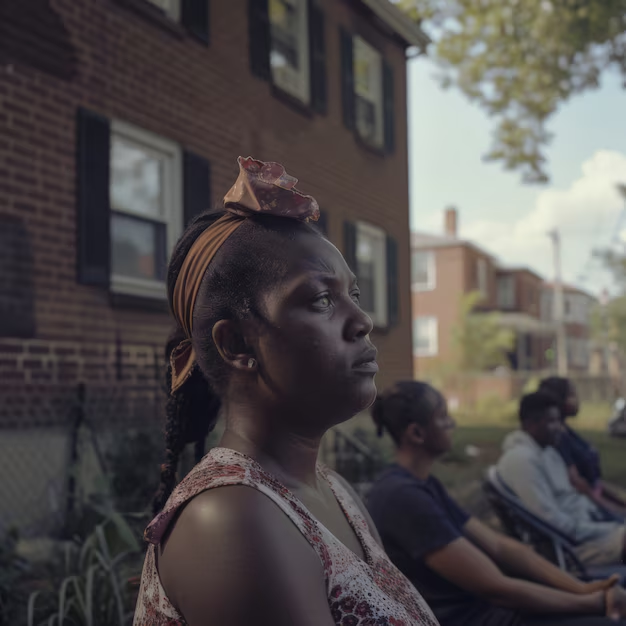
For many people, the hardest part of going through emotional pain is not always the pain itself. It is the fear of what other people will say when they find out.
A young man may be struggling with anxiety but remain silent because he has been told to “be a man”. A grieving mother may hide her sadness because relatives expect her to “move on”. A student experiencing depression may avoid asking for help because classmates could label them as weak or unstable.
These everyday reactions show why reducing mental health stigma cannot be left only to hospitals and mental health professionals. Communities matter because they shape how people talk, behave and respond when someone is struggling.
Why Mental Health Stigma Is So Harmful
Stigma can appear as insults, discrimination, exclusion, fear or simply refusing to take someone’s emotional experience seriously. It can also become internalised, causing people to feel ashamed of their own struggles.
According to the World Health Organization (WHO), stigma exists in homes, schools, workplaces, communities and even healthcare settings. It can contribute to social isolation and make people less willing to seek help.
The scale of the problem is significant. A WHO report in 2022 estimated that nearly one billion people were living with a mental disorder in 2019.
The problem is also relevant in Africa. The WHO’s World Mental Health Report cited research from south-west Nigeria in which 97% of respondents believed people with mental health conditions were dangerous, while only 17% said they would consider marrying someone with a mental health condition. These figures demonstrate how deeply misconceptions can influence ordinary social relationships.
Start With How People Talk
One of the simplest ways communities can reduce stigma is by changing everyday language.
Calling someone “crazy”, “mad”, “unstable” or “possessed” may seem like ordinary conversation, but such descriptions can reinforce harmful stereotypes. Communities can instead encourage people to describe behaviour or experiences without reducing the whole person to a label.
This does not mean every difficult emotion should be treated as a mental illness. People experience sadness, grief, fear, stress and disappointment as part of normal life. The important distinction is knowing when someone may need additional support and creating an environment where asking for that support is acceptable.
Schools, religious organisations, workplaces, community associations and families can help by teaching basic mental health literacy and explaining when professional support may be appropriate.
Let People With Lived Experience Be Heard
Awareness campaigns are useful, but people often learn differently when they hear directly from someone who has experienced a mental health condition and recovered or learned to manage it.
Research increasingly supports this approach. A 2026 meta-analysis published in Clinical Psychology Review examined 209 published and unpublished studies involving more than 36,000 participants immediately after interventions. It found that social-contact approaches were associated with reductions in mental health stigma, including effects that remained at short- and medium-term follow-up.
This can happen through community discussions, peer-support groups, school programmes, documentaries, public talks or carefully designed online campaigns.
However, contact should be respectful. Nobody should be pressured to disclose a private diagnosis or painful experience simply to educate others.
Build Safe Spaces for Honest Conversations
A community does not necessarily need a large mental health centre to begin making a difference.
A church, mosque, school, youth centre, workplace or neighbourhood association can create a regular space where people can discuss stress, grief, relationships, parenting, loneliness and emotional wellbeing without being mocked.
Such spaces should have clear boundaries. Volunteers should not pretend to be therapists, and serious mental health concerns should be referred to qualified professionals.
The WHO’s 2025 guidance on community-based mental health care emphasises bringing support closer to where people live, work, study and connect. It also highlights peer-led initiatives and the importance of including people with lived experience in designing services.
Make Help-Seeking Normal
Perhaps the strongest cultural change is to stop treating professional help as something reserved for people who have “lost their minds”.
Someone can seek counselling because they are grieving. Another person may need psychological support after trauma. Someone else may be struggling with anxiety that is affecting work or relationships.
Seeking help is not proof of weakness. It can be an ordinary step towards dealing with a difficult situation.
A 2025 WHO policy guidance also stresses the importance of addressing social factors such as poverty, housing, education and employment while expanding access to mental health support.
Communities Must Move Beyond Awareness
Posters and awareness days can start conversations, but stigma is unlikely to disappear because people attend one event.
A 2022 systematic review of indirect social-contact interventions in low- and middle-income countries found that effective programmes commonly combined education with personal experiences and culturally relevant approaches.
More recent evidence points in the same direction. A 2024 systematic review examining social contact in low- and middle-income countries identified mental health as one of the major areas where this approach has been studied.
The lesson is practical: communities need repeated, credible and culturally appropriate conversations, not occasional slogans.
Creating Communities Where People Feel Safe
Reducing mental health stigma ultimately comes down to how people treat one another when life becomes difficult.
It means listening before judging. It means checking on the person who has suddenly withdrawn. It means allowing men to admit that they are struggling and allowing women, young people and older adults to seek support without shame. It means knowing when a problem is beyond what friends and family can safely handle and helping the person connect with qualified care.
According to the WHO’s 2022 World Mental Health Report, transforming mental health requires stronger community-based support and environments in which people can participate fully without stigma and discrimination.
A healthier community is therefore not one where nobody struggles. It is one where people do not have to hide their struggles before they can receive compassion, understanding and appropriate help.